
Unattended First-Aid Skills Training & Assessment
Unattended training and assessment for first-aid skills: training terminals record every practical session from multiple cameras, with live view, replay and tutor feedback, and a regional dashboard covering every site.
Background
First-aid training spans emergency doctors, nurses, stretcher bearers, dispatchers and drivers, and practical exams relied on examiners being on site and scoring by hand. Training sites are spread across districts, so scheduling examiners was costly and sites were hard to coordinate or compare. Without full video records, results could not be reviewed when questioned, and training data was difficult to pull together.
What we built
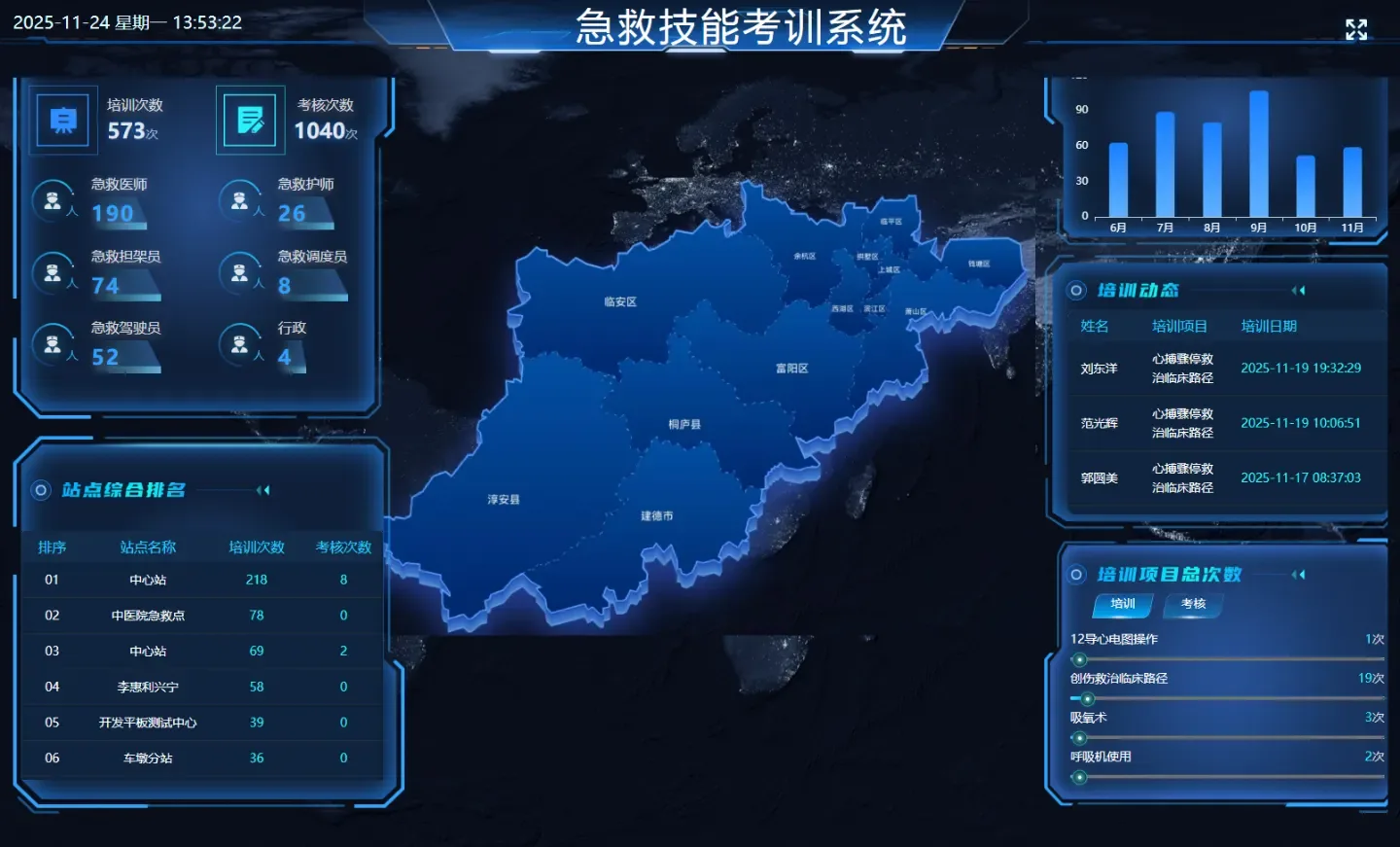
The system has three parts: training terminals, a back office and a regional dashboard. Each terminal records from main, left, right, rear and head-mounted cameras, viewed together or one at a time, live or on replay. The back office covers skills training, speech recognition, live and recorded video, competency assessment and terminal management, and replays carry a timeline of actions, tutor comments and discussion. The dashboard maps training and assessment counts by site, staff mix, training items and recent activity.
Key features
- Multi-camera recordingmain, side, rear and head-mounted cameras record together, shown combined or individually.
- Live view and replaysessions stream live and can be replayed afterwards with speed and quality controls.
- Timelinereplays mark actions and camera switches by time, so key steps are quick to find.
- Tutor feedbacktutors comment at the relevant moment, and trainees and managers can read and reply.
- Competency assessmentresults are recorded and scored online per training item as evidence of skill level.
- Terminal managementall site terminals are managed centrally, with visibility of devices and sessions.
- Regional dashboarda map of training and assessment counts per site, with site rankings and monthly trends.
- Role and item statisticstraining data broken down by role, such as doctors, nurses and stretcher bearers, and by item, such as CPR.
Screenshots
Related case studies
Hangzhou Medical College Alumni Forest
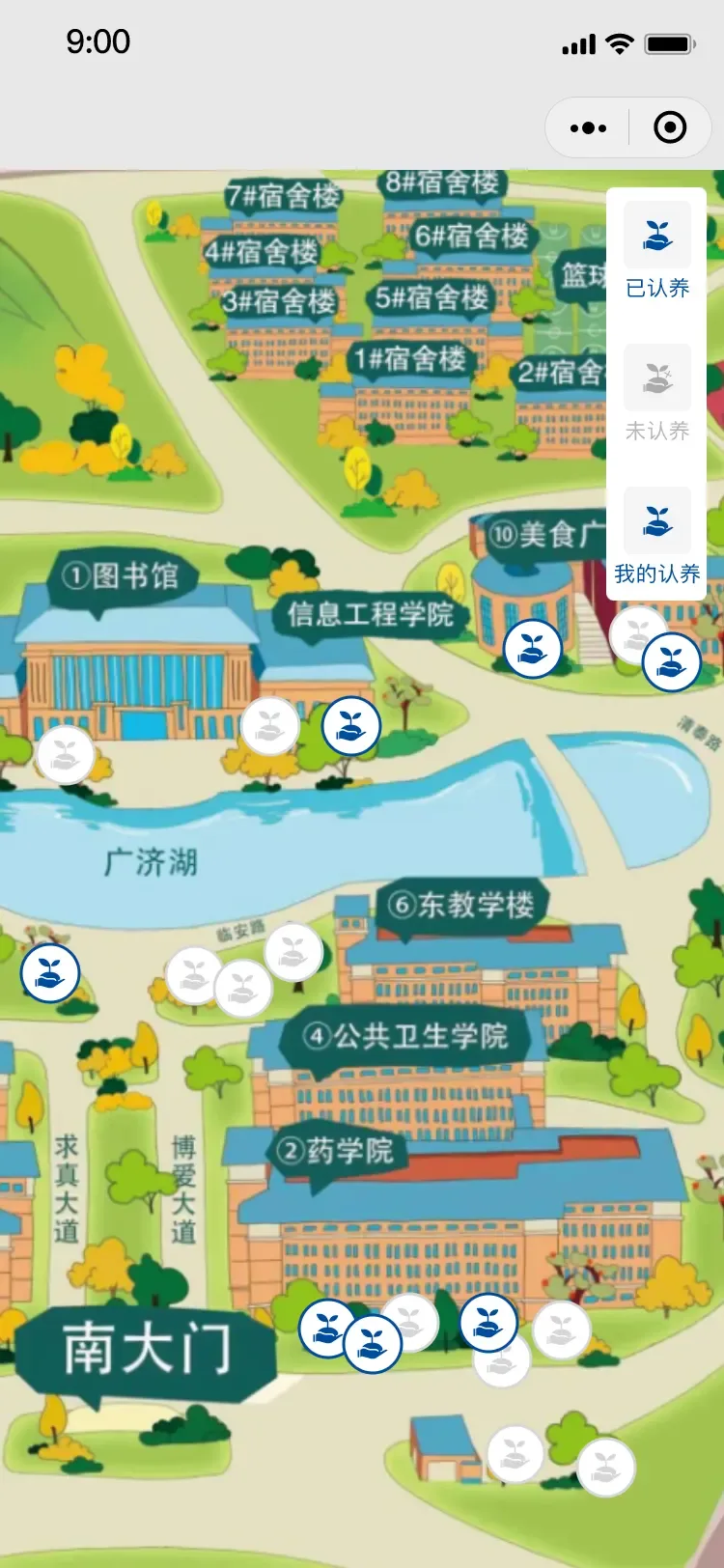
An illustrated campus map shows every tree in the alumni forest. Alumni adopt trees online, follow their adoption status and keep in touch through forums.
Science Education Study-Tour System
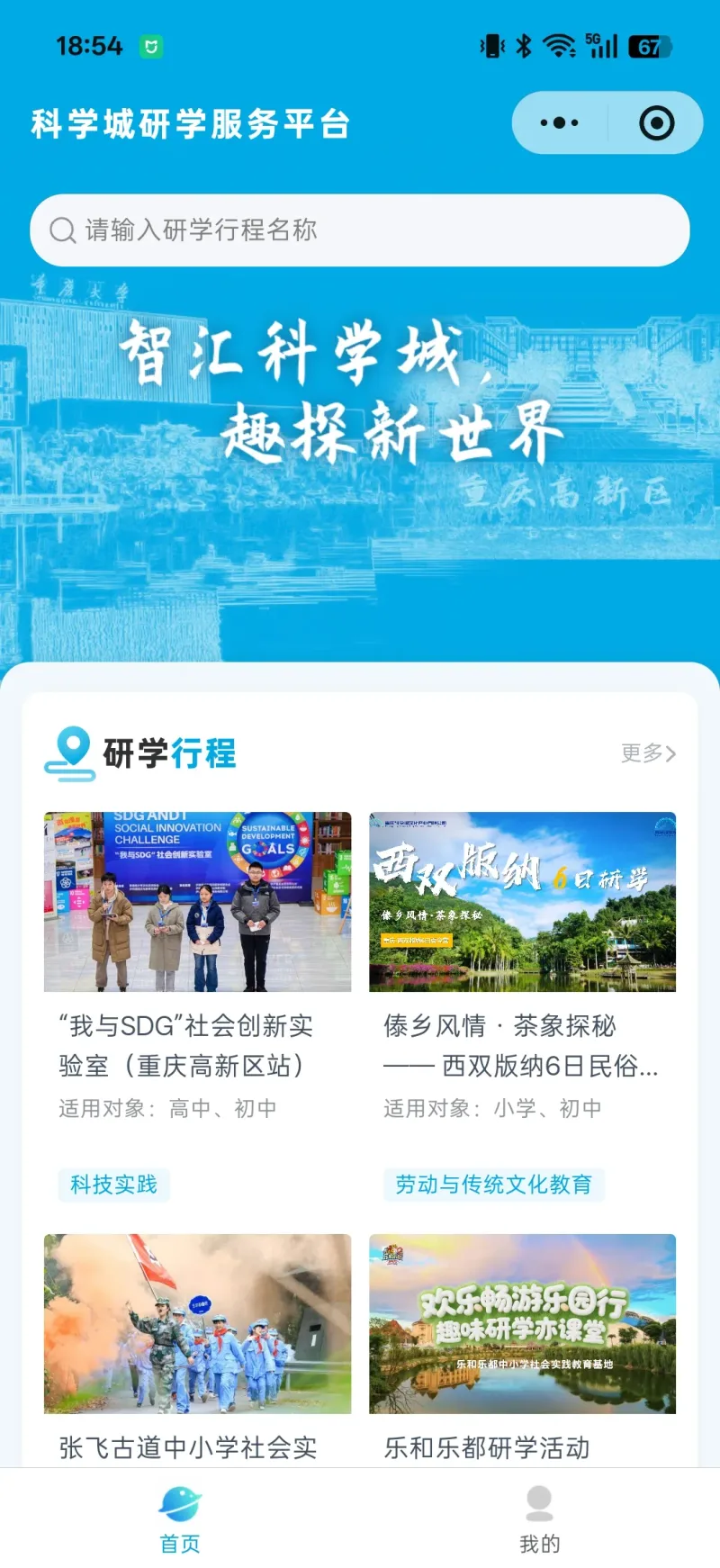
A study-tour platform bringing together local research institutes and science venues, connecting sign-up, organisation, activity and archiving, with one-click e-portfolios linked to student evaluation.
Have a project in mind?
Tell us about your business and we'll send initial ideas within one working day.